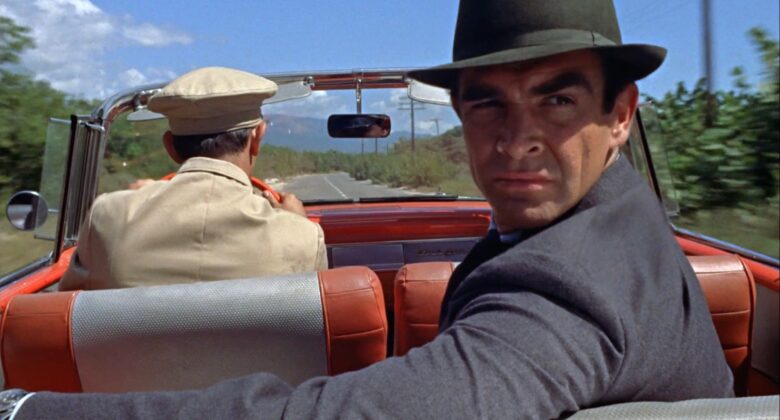
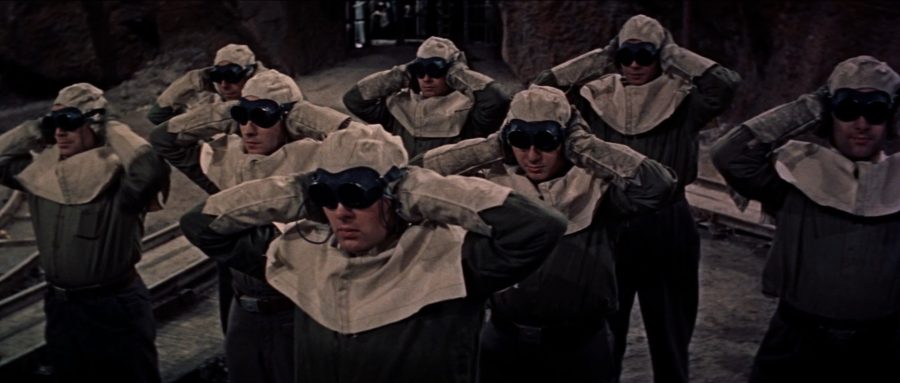
Dr. No (1962)

As the first installment on the James Bond franchise, Dr. No (1962) set the narrative template for the films that followed. One convention that the film lays down is a final act set piece in which Bond foils the plans of the antagonist through a set of actions that normally involves the explosion of their facility.

Face/Off (1997)

The final act set piece in Face/Off (1997) features John Woo’s signature action staging, initially developed in the 1980s heroic bloodshed cycle, as noted in the action profile for A Better Tomorrow (1986), and offers amongst the most notable boat chases in film history. Along the way Woo offers a Mexican standoff and a pursuit sequence that not only reveals changes in mode of pursuit but also a clear illustration how action scenarios can combine horizontally.

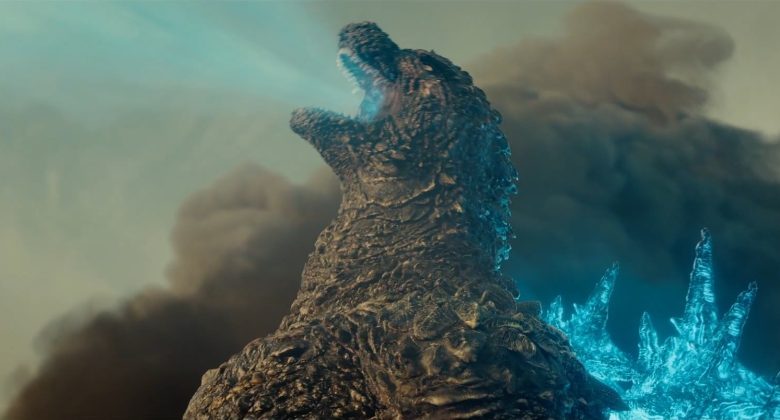
Godzilla Minus One (2023)

Takashi Yamazaki’s Godzilla Minus One (2023) is at once a reboot of the original 1954 Godzilla film and a homage to the first installment of the franchise. This relationship between the two films is most strikingly manifested during the Attack on Ginza sequence – a composite of the first two Godzilla attacks on Tokyo in the original – where a number of parallel moments arise. Yet, Godzilla Minus One reconfigures this attack in a pivotal way by placing its central characters, Kōichi and Noriko, directly within the devastation, thereby dramatically raising the stakes. This contrasts with the principal characters in the first film, who witness Godzilla’s rampage but from a far safer distance.

Iron Man (2008)

One action scenario that is particularly showcased in Iron Man (2008) is the speed scenario. Tony Stark’s Iron Man armor is the principal reason for this emphasis that is not only weaponized in a variety of ways but is also fitted with arc-reactor-powered repulsors that allow Stark to travel at supersonic speeds.

Hardcore Henry (2015)

Hardcore Henry (2015) is a unique cinematic experiment as an amalgam of the science fiction film, combined with the aesthetics of the First-Person Shooter (FPS) video game. Shot entirely from the optical point of view of Henry, the cyborg protagonist, the film aligns the viewer with Henry’s perspective as he pursues goals that are more akin to gaming level progression than character development. With an unprecedented 87% action-to-story ratio, the film also claims the title of the most action-packed film analyzed on this website.

Lethal Weapon (1987)

The El Mirage Lake shootout featured in Lethal Weapon (1987) closes in a manner typical of 3rd acts in mainstream films, namely through an all-is-lost moment. The moment is dramatically heightened given that it constitutes a reversal of Roger Murtaugh and Martin Riggs’ original rescue plan to save Murtaugh’s daughter Rianne from the hands of Shadow Company, an ex-special forces unit involved in drug smuggling.