

Source: VVS Films: Blu-ray, 2016.
Year: 2015
Director: Ilya Naishuller
Action Stars:
Genre: Science-Fiction
Country: Russia
Story Duration: 01:26:33
Act Duration:
1st Act: 00:22:51
2nd Act: 00:22:50
3rd Act: 00:21:32
4th Act: 00:19:20
Plot Turns:
1st: First Mission
2nd: Henry Offline
3rd: Mercenaries Defeated At Lab
ASD Ratio: 87%
AAD Ratios:
1st Act: 74%
2nd Act: 85%
3rd Act: 91%
4th Act: 99%
Action Structure: 1423
Action Scenarios:
Capture
Escape
Fall
Fight
Heist
Pursuit
Rescue
Speed
Transfer
Total Action Moments: 15

Notable Action Sequence: Highway Pursuit Sequence
Duration: 00:04:37
Act: 4th
Action Scenarios:
Fight
Pursuit
Speed
Transfer
Description:
Hardcore Henry (2015) is a unique cinematic experiment as an amalgam of the science fiction film, combined with the aesthetics of the First-Person Shooter (FPS) video game. Shot entirely from the optical point of view of Henry, the cyborg protagonist, the film aligns the viewer with Henry’s perspective as he pursues goals that are more akin to gaming level progression than character development. With an unprecedented 87% action-to-story ratio, the film also claims the title of the most action-packed film analyzed on this website.
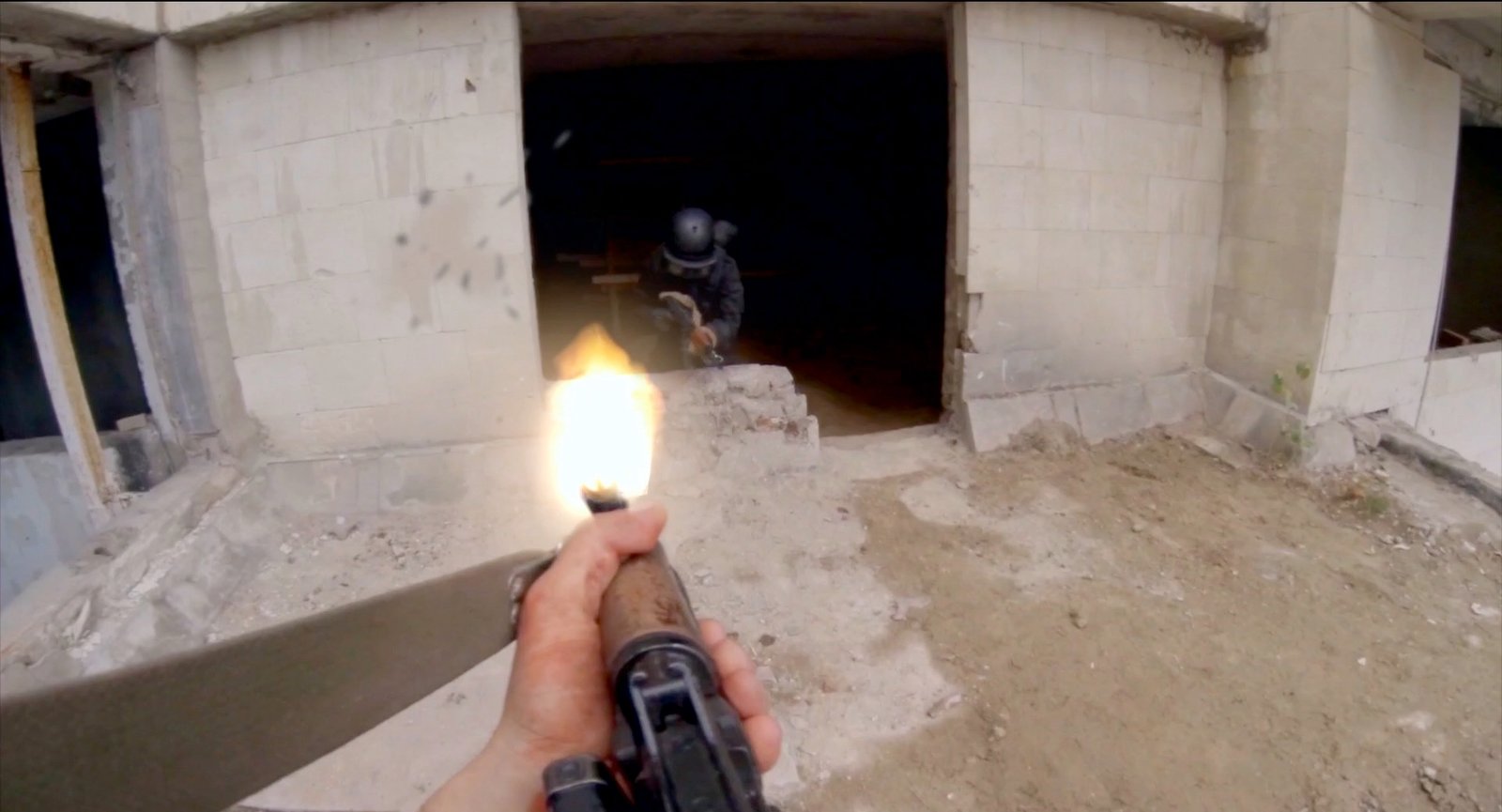
The film meticulously adopts the visual and structural aspects of the FPS gaming genre that resultantly privilege the fight scenario as its principal action form. The most evident adopted gaming convention is the film’s unwavering, continuous optical point-of-view, which aligns the viewer to see entirely through the eyes of the silent protagonist, replicating the avatar projection central to the FPS experience [Figure 1]. This perspective is reinforced by the consistent inclusion of Henry’s hands and arms in the frame, indicating actions such as running, climbing, and weapon handling, which define the visible boundary of the player character. Furthermore, the pacing rigorously follows the run-and-gun video game subgenre, maintaining a brisk, unrelenting stream of action for most of the film’s 96-minute runtime, structurally aligning the film with on-rails shooter progression where the protagonist (and viewer) is fiercely driven forward with little time for reflection.
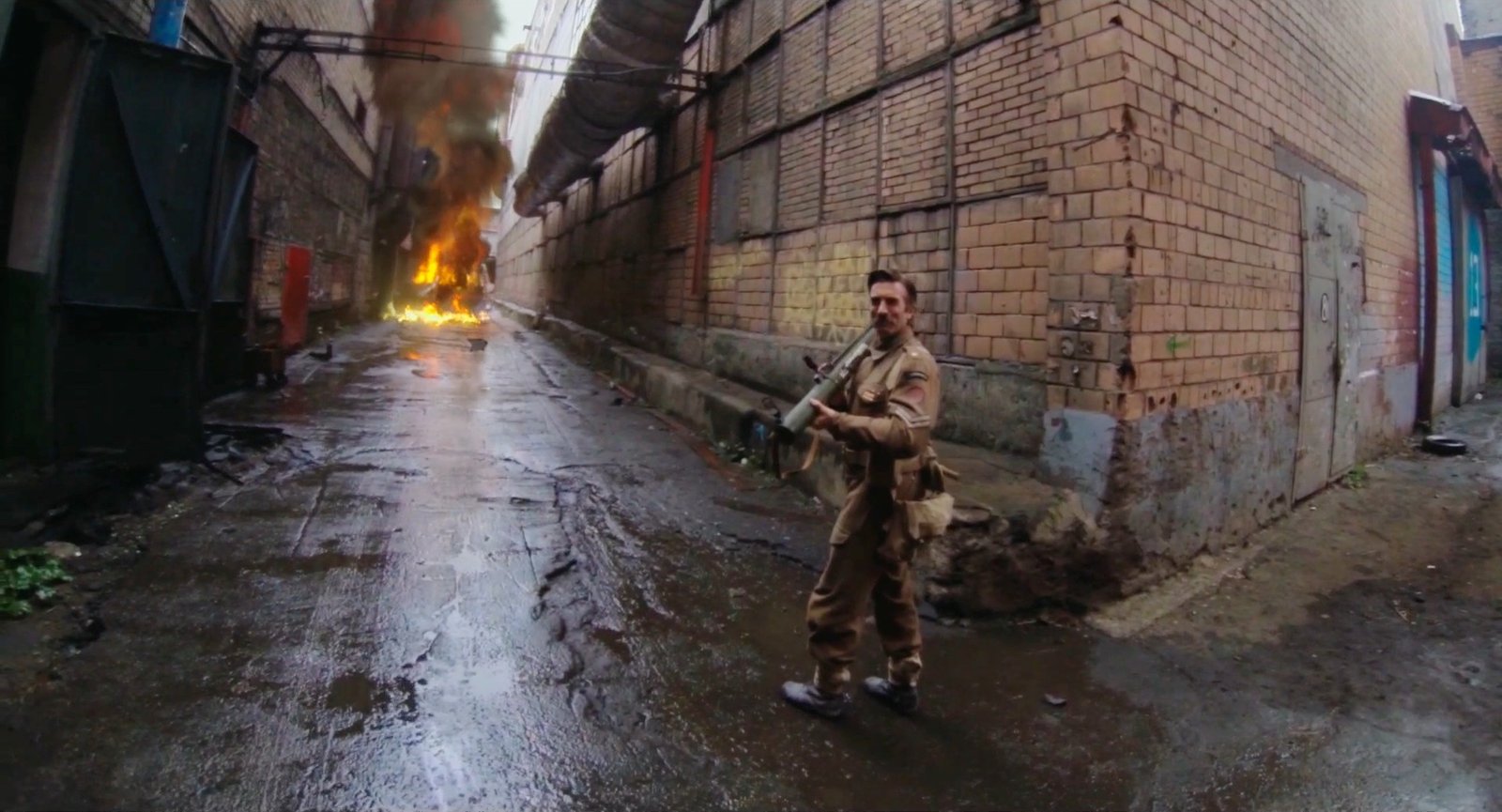
The narrative and character design of the film are deliberately engineered to translate game mechanics into plot devices. Henry himself is a classic FPS avatar: an amnesiac, mute protagonist. The central missions of the film, such as obtaining a powerful battery from a rival cyborg, adopts the quest structure common to video games [Figure 2]. Notably, the film also includes the quintessential Non-Player Character (NPC) guide in the form of Jimmy (Sharlto Copley), who repeatedly appears in wildly different cloned bodies, which serves as the narrative analogue for the checkpoint and respawn mechanism, ensuring the essential guide is always available to provide exposition to Henry and to the viewer [Figure 2].
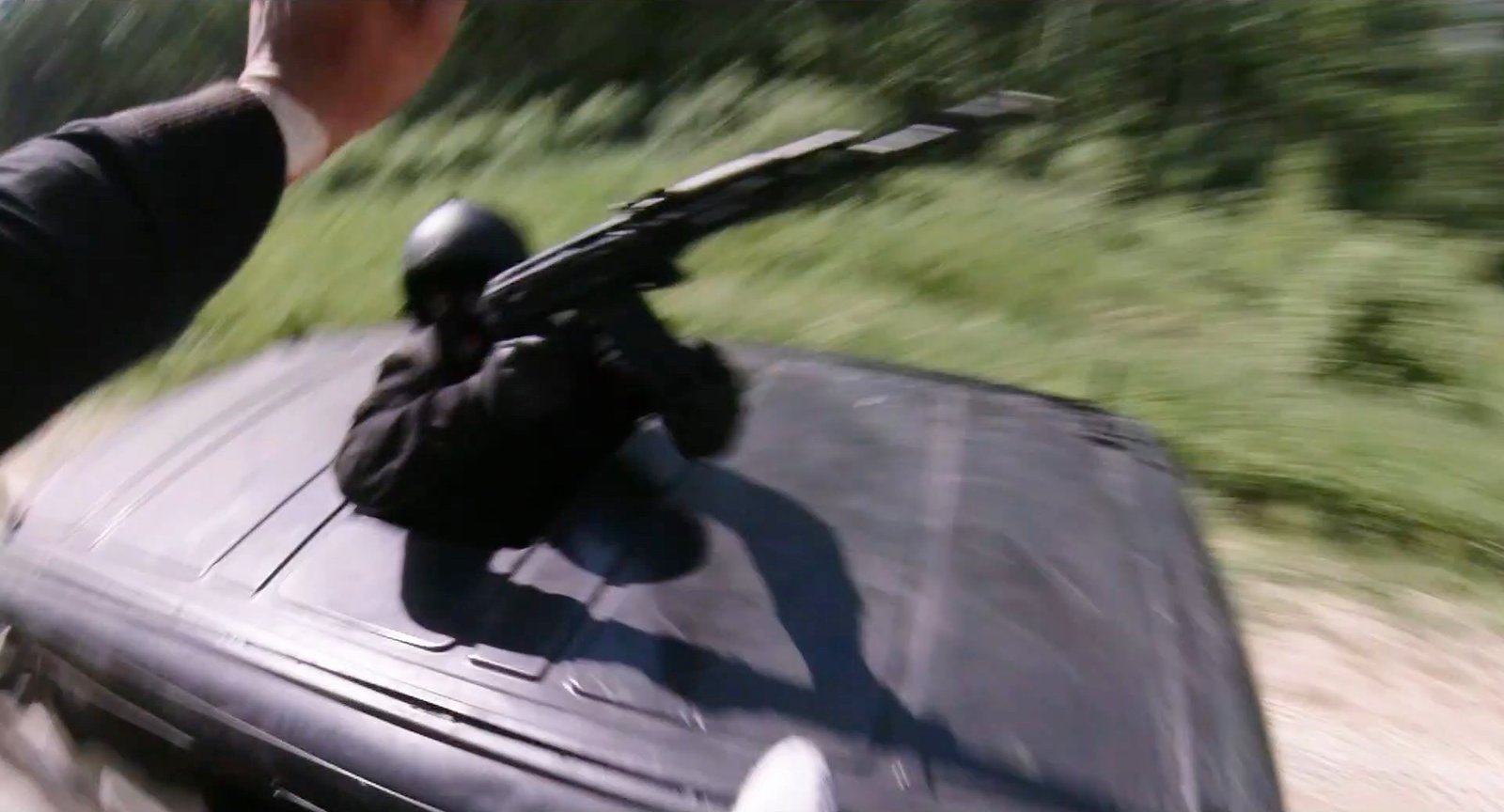
These aspects of the film’s first-person shooter aesthetic are evident in the highway pursuit sequence. The sequence begins with Henry and Jimmy pursuing a mercenary convoy on a motorcycle sidecar, quickly escalating into an aggressive attack where the heroes destroy one van and use the blown doors of a second as a ramp to drive directly through the enemy vehicle while firing. This continuous action sequence is punctuated by the first major transfer that maintains the pacing: Henry leaps from the speeding sidecar onto the mercenary van, instantly engaging in melee combat, disarming, and kicking the enemy inside [Figure 3]. The intensity momentarily spikes when Jimmy crashes the sidecar, leading Henry to dispatch the vehicle with a hand grenade. The explosion launches Henry high into the air, setting up the next crucial sequence in his desperate pursuit.
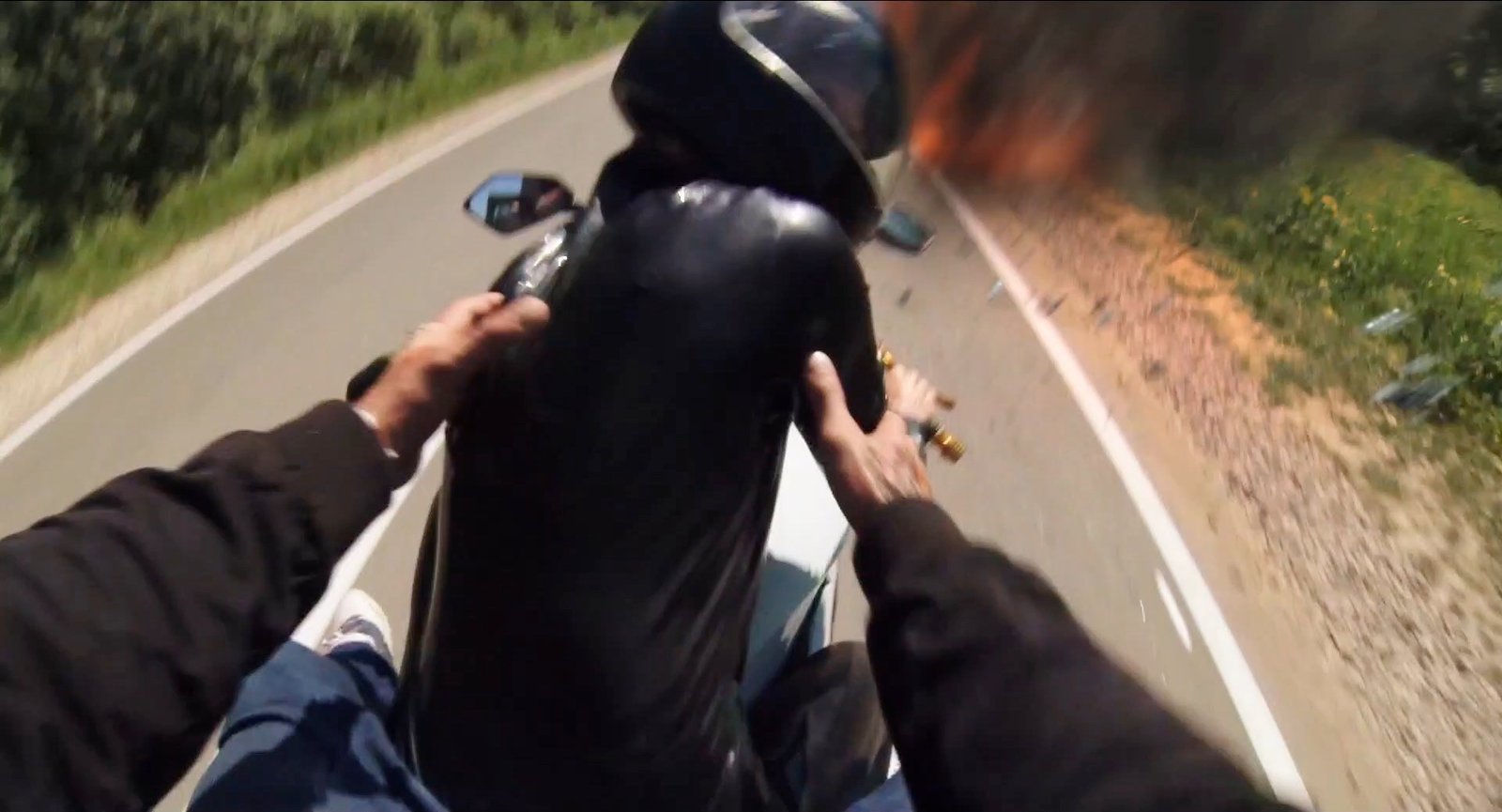
The second key transfer occurs moments later when Henry, still airborne from the explosion, lands seamlessly onto the back of Katya’s speeding motorcycle, who joined the chase [Figure 4]. The pursuit eventually culminates when Henry is pushed from Katya’s motorcycle and barely clings to the bumper of a mercenary van, ending the exterior chase component. This transition initiates the final, bloody confrontation inside the truck’s cabin, culminating in Henry’s temporary incapacitation by Akan viciously slugging Henry in the head with a baseball bat.
The highway pursuit sequence, therefore, is a notable cinematic translation of the escort mission segments found in certain FPS games and is designed to emulate their continuous, high-speed action.